
For many families, dyslexia enters the conversation quietly: a child who works harder than peers, reading that never seems to get easier, and spelling that doesn’t stick no matter how much practice there is.
Parents often wonder what they are missing, or what more they should be doing. Here are 5 things teachers wish parents understood about dyslexia.
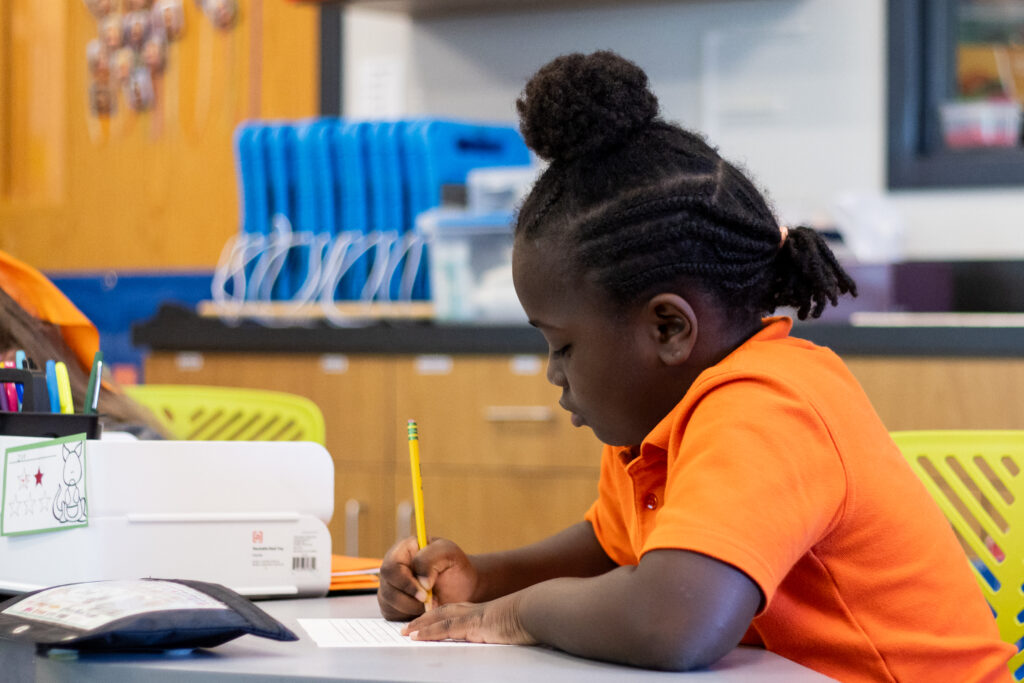
According to the International Dyslexia Association, dyslexia is a neurobiological learning difference that primarily affects reading and related language skills. It is not caused by lack of effort, motivation, or intelligence. In fact, many students with dyslexia are highly verbal, curious, and creative thinkers.
Our teachers see this every day.
Our educators often wish parents knew that dyslexia can be difficult to spot, especially in bright children who compensate well. A student may excel in discussion, storytelling, or problem-solving while quietly struggling with decoding, spelling, or reading fluency.
Many children with dyslexia develop strong coping strategies that mask reading challenges and delay identification and support. These students may appear to be doing “well enough,” even as reading remains exhausting and inefficient.
Another common misconception is that children will “grow out of” dyslexia. According to Understood.org, students with dyslexia can learn to read and succeed academically, but the learning difference doesn’t completely disappear with time.
What does make a difference is instruction, specifically structured, explicit literacy instruction that addresses how the brain processes language. When students receive instruction aligned to how they learn, progress becomes possible and sustainable.
Teachers also wish parents knew how powerful early understanding can be. When dyslexia is identified and addressed appropriately, students often experience a noticeable shift in confidence.
“Ruby has blossomed,” said Roberts Academy parent, Emily Elsworth. “She now loves to read. She is confident. She is happy. She is loved. She is a leader. She loves to come to school.”
With a diagnosis and remediation, dyslexic students begin to understand that their struggles have a name, an explanation, and, most importantly, a solution. That clarity can reduce anxiety, frustration, and self-doubt, giving students with a sense of direction and hope.
At Roberts Academy, this belief is central to everything we do. Effective dyslexia instruction is structured, systematic, and explicit – qualities found in the Orton-Gillingham approach.
The International Dyslexia Association recognizes Orton-Gillingham–based instruction as effective for students with dyslexia because it is sequential, multisensory, and responsive to individual learners.
Related: What Is Multisensory Instruction in the Orton-Gillingham Approach?
This February, Roberts Academy will host two Discovering Dyslexia community sessions, including one featuring Ellen Hill, a literacy expert and Orton-Gillingham Fellow.
Ellen Hill brings deep expertise in evidence-informed reading instruction and practical insight into how structured literacy supports students with dyslexia and why it works. Her session is designed to help families understand not only what dyslexia is, but how effective instruction meets students where they are.
Dyslexia affects about one in five individuals, according to the International Dyslexia Association. Chances are, it already touches your family, your classroom, or your community.
Discovering Dyslexia is open to parents, educators, and community members and will be held in February at Roberts Academy. We invite you to join us, especially for the session featuring Ellen Hil, to learn, ask questions, and gain a clearer understanding of how children with dyslexia can thrive.
Roberts Academy serves students in grades 2–6 and is Georgia’s only school for dyslexic students outside of Metro Atlanta. The Academy uses the Orton-Gillingham Approach, an evidence-based method of reading instruction designed specifically for students with dyslexia. Roberts Academy is also the most affordable school of its kind in the state.
Both Discovering Dyslexia sessions are open to families, educators, and community members interested in learning more about dyslexia and evidence-based instruction. To RSVP for one or both sessions, click here. To learn more about Roberts Academy or to schedule a tour, visit the Academy’s website.




Discover Roberts Academy at Mercer University in Macon, Georgia!