
Across the education landscape, books and research are sparking critical conversations about the impact of too much technology in classrooms. From concerns about screen time to debates over whether digital tools enhance or hinder learning, educators and families are asking: How should technology be used – if at all – to support student success?
At Roberts Academy at Mercer University, we approach this question with both a respect for research and a deep understanding of how students with dyslexia learn best. While new studies raise valid concerns about excessive screen time and passive digital instruction, our experience shows that purposeful, limited use of technology, especially assistive technology, can be transformative for learners with dyslexia and related language-based differences.
Rather than relying on screens as a default teaching tool, Roberts Academy uses technology strategically and sparingly to reinforce skills, increase access to grade-level content, and build students’ confidence and independence. In our classrooms, devices are never used in place of instruction—they are used to support instruction that is structured, multisensory, and prescriptive.
This approach ensures that technology works for our students, not around them.
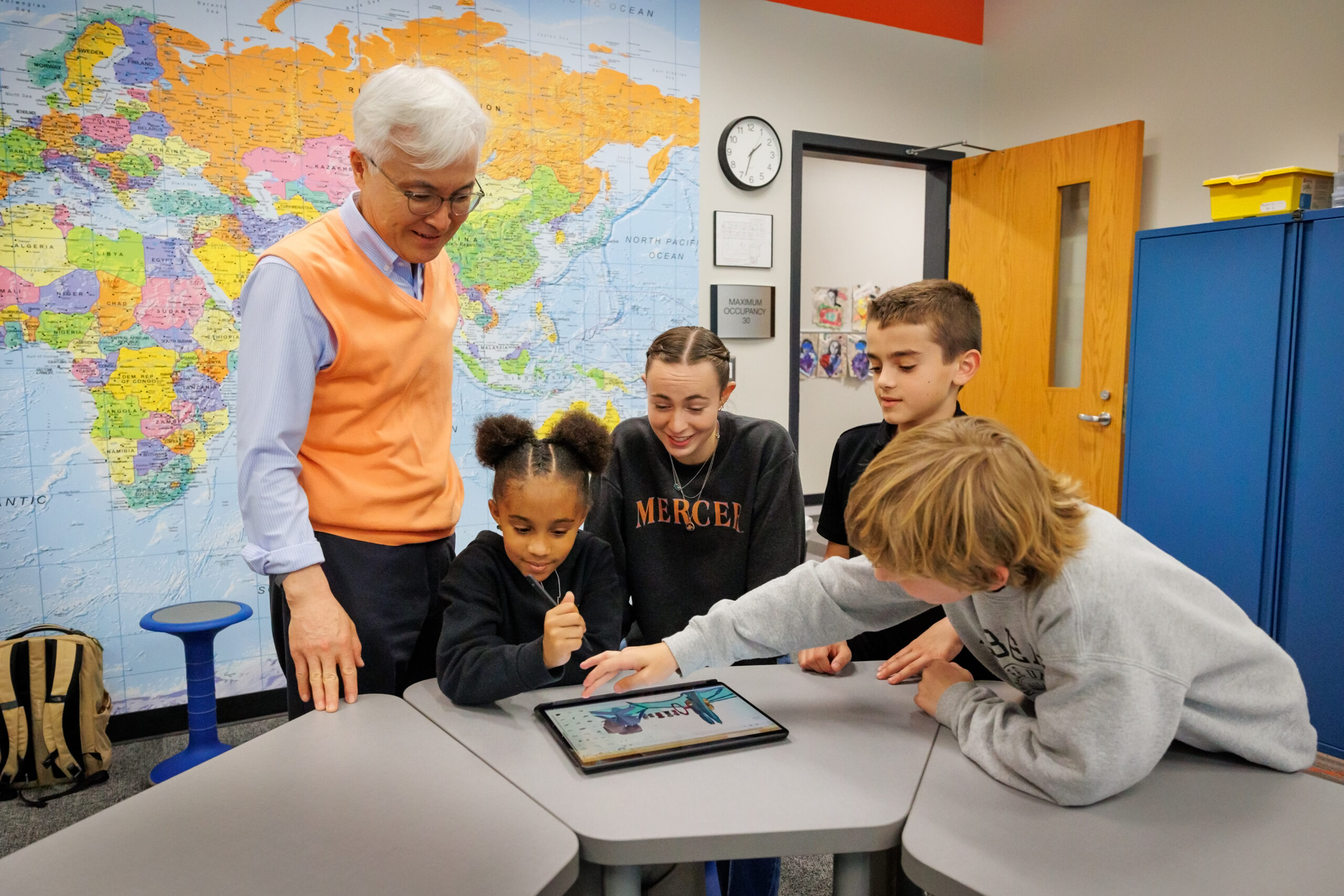
Students at Roberts Academy spend no more than 30 minutes per day on devices. This limited screen time reflects the Academy’s instructional philosophy: technology should enhance learning, not dominate it.
The majority of instruction takes place through direct, multisensory teaching, where students engage actively with their teachers and peers. Technology enters the picture only when it serves a clear purpose, such as reinforcing skills, accessing assistive tools, or supporting deeper exploration of a topic.In other words, screen-based technology is a supplement to instruction – not a substitute for it.
At Roberts Academy, students first learn new concepts through structured, multisensory lessons delivered by highly-trained and experienced teachers. Technology is then used to practice, reinforce, and apply those skills.For example, after learning a new reading or spelling concept, students may use a digital activity, such as Lexia or Project Read AI, to review the skill.
This approach ensures that technology supports mastery without replacing the essential teacher-guided instruction that dyslexic learners need.
Technology at Roberts Academy is scaled by age and developmental readiness. Each grade level uses devices that best match students’ learning needs.
Device progression by grade:
This progression helps students build digital skills gradually while keeping technology aligned with their developmental stage.
For many students with dyslexia or dysgraphia, assistive technology is not a convenience – it’s an essential tool for learning.
Common supports include:
Dyslexic students often decode text slowly, especially with longer reading passages. Text-to-speech tools, such as Learning Ally, read content aloud, allowing students to access grade-level information while reducing the cognitive load associated with decoding every word.This enables students to focus on comprehension rather than simply getting through the text.
Students with dyslexia and dysgraphia frequently have strong ideas but struggle to express them through handwriting or spelling. Voice-to-text technology allows students to dictate their thoughts, converting speech into written words.
This helps students:
Many dysgraphic students experience difficulty with handwriting due to challenges with fine motor skills or written expression. Typing allows them to communicate their ideas more fluently and with less physical strain.Together, these tools remove barriers so students can demonstrate what they truly know and understand.
Related: What is Dysgraphia?
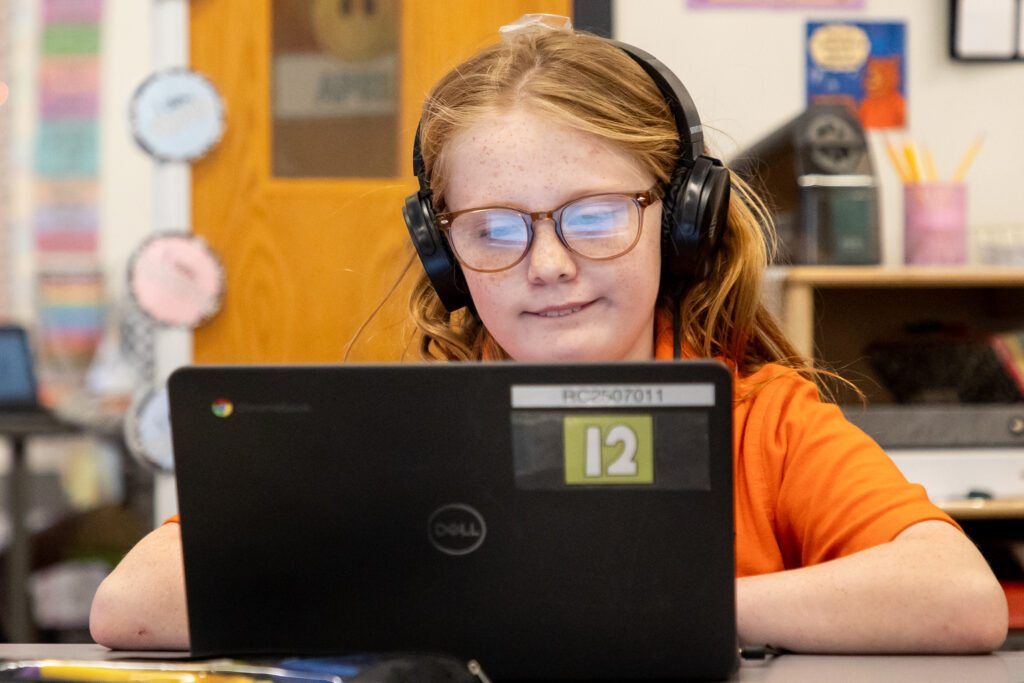
Roberts Academy also prepares students for the future by introducing thoughtful and responsible use of artificial intelligence tools in middle school.
For many dyslexic learners, comprehension can be challenging when reading dense or complex material. AI tools can help by:
When used appropriately, these tools act like a personalized tutor that helps students better understand what they are reading.At Roberts Academy, students are taught how to use AI responsibly and strategically, ensuring that technology supports learning rather than doing the work for them.
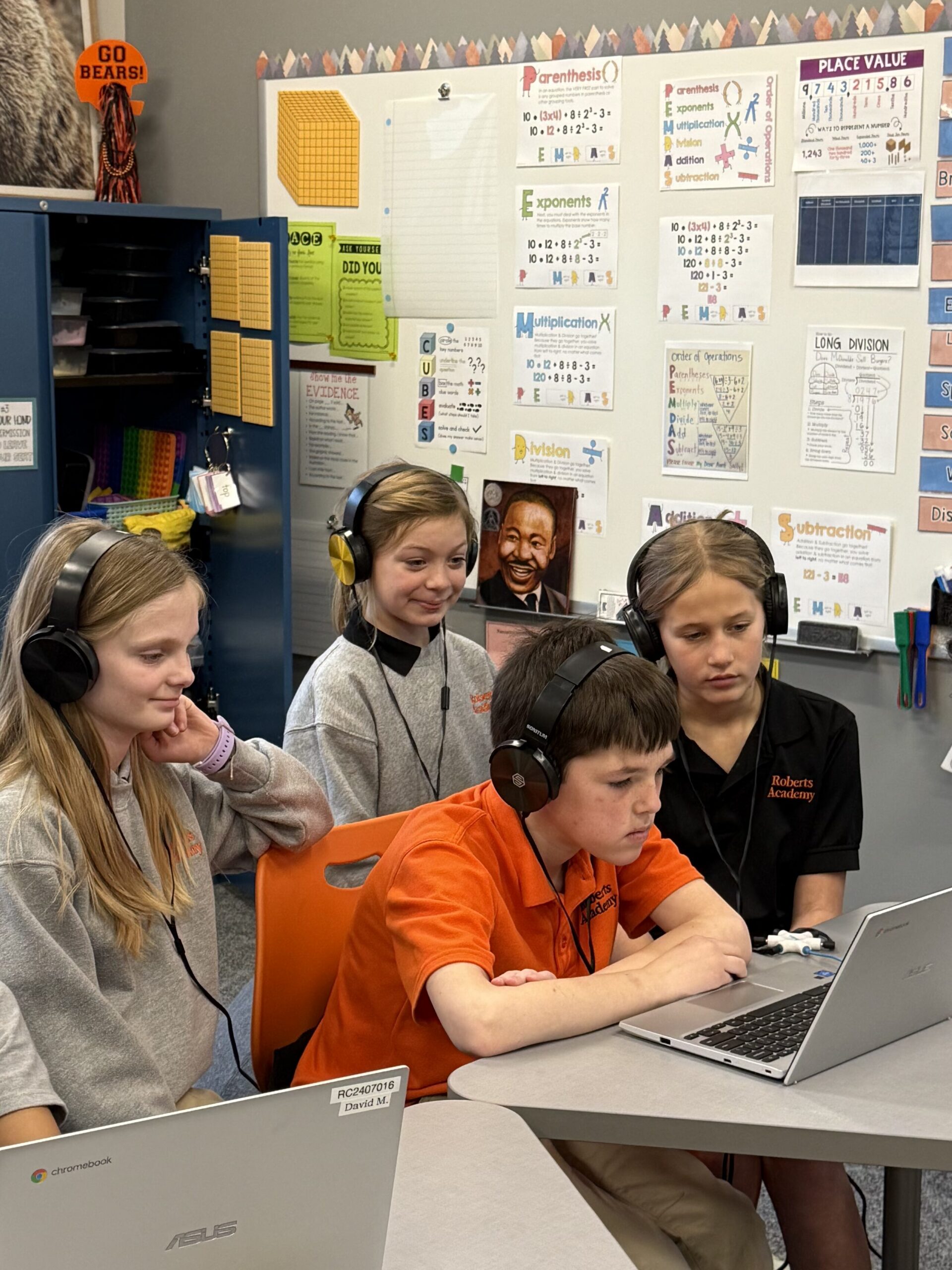
One of the most important goals at Roberts Academy is preparing students for success after they transition to their next school.
By learning how to use assistive technology effectively, students also learn how to advocate for the tools they need.
Whether requesting text-to-speech access, using voice-to-text for writing assignments, or leveraging AI for comprehension support, students develop the confidence to say: “This is how I learn best.”These self-advocacy skills are a critical part of the outplacement process, helping students transition successfully into other schools where they will continue using these tools throughout their academic careers.
Technology at Roberts Academy is also used to support research and exploration.
When students become curious about a topic – whether in science, history, or literature – digital tools allow them to quickly explore additional information, images, and resources that deepen their understanding.This ability to follow curiosity helps keep students engaged, motivated, and excited about learning.
The approach to technology at Roberts Academy is simple: use it when it helps, and put it away when it doesn’t.
By combining:
the Academy ensures that technology remains a powerful support tool rather than a distraction.
For dyslexic learners, this balanced approach helps remove barriers, build confidence, and prepare students for success in the classroom and beyond.
Roberts Academy at Mercer University is the only transitional elementary school of its kind in Georgia outside of Metro Atlanta. The mission of the Academy is to prepare students with dyslexia to achieve academic success through dynamic educational programs.
The Academy teaches a comprehensive curriculum designed for grades 2 through 6 using the Orton-Gillingham approach, a specialized learning method clinically proven to help students with dyslexia. Students attend the Academy until they have mastered the skills to accommodate their learning differences and are prepared to succeed in a traditional school setting.
For more information and to schedule an admissions tour, visit www.robertsacademy.org




Discover Roberts Academy at Mercer University in Macon, Georgia!